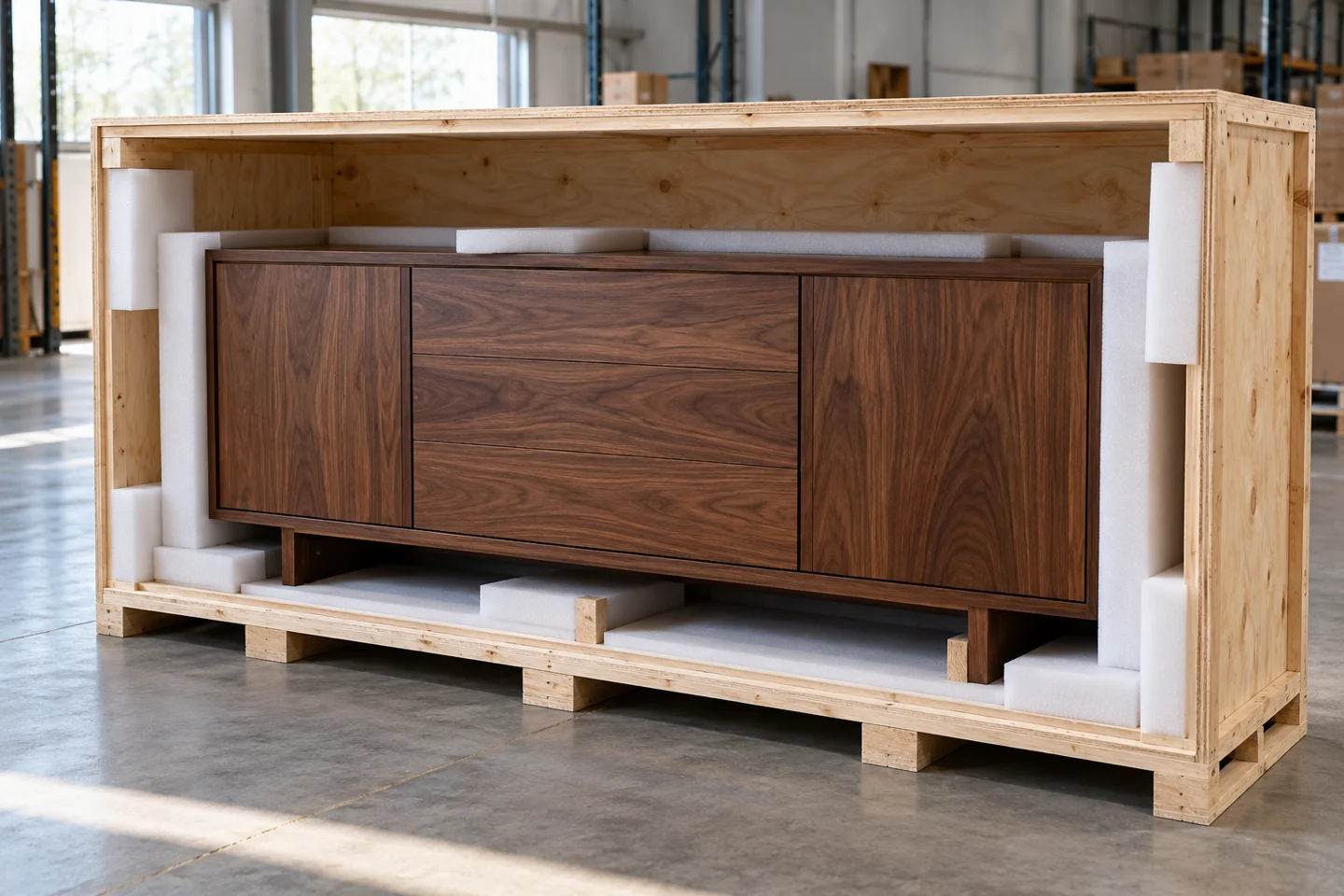
Choose protection for the actual item
Identify vulnerable edges, projecting hardware, glass, stone and delicate upholstery. Ask how the item will be supported and how different materials will be kept from rubbing against each other. Heavy components should not be allowed to move inside a package. The suitable combination of wrapping, cushioning, cartons, pallets or crates depends on the product and handling plan; more material alone is not proof of better protection.
Resolve assembly and loose parts
Decide which furniture ships assembled and which ships in sections. Separating a table base may reduce package size but adds assembly work at destination. Label components so they can be matched without opening every carton. Bag and identify fittings, include the agreed instructions and record spare hardware separately. A missing small connector can stop installation of an otherwise complete item.
Make labels useful at the receiving site
Use a consistent project reference, item code, package number and destination zone where appropriate. If a desk occupies three cartons, identify all three as a set. Keep the packing list consistent with the labels. Agree any handling marks with the logistics provider and verify destination-related packaging requirements with the relevant qualified advisers rather than assuming one packing arrangement suits every country.
Inspect the package as well as the furniture
Request the agreed packing evidence before goods are released. Check that surfaces are protected, components are restrained and labels match the schedule. Record external package dimensions and gross weight for transport planning. If a prototype packing trial or specialist packaging test is needed, define it separately. Photographs can show the packing method but do not prove how every package will perform throughout the journey.
Project checklist
What to prepare
- Product-specific packing method and assembly plan.
- Labels linked to the item schedule and destination zones.
- Packing list with package quantities, dimensions and weights.
- Agreed photos, checks and responsibility for packing corrections.
A useful question
Is a wooden crate always the safest furniture packaging?
No. Protection depends on the structure, internal support, item vulnerability and handling route. A poorly supported product can move inside a crate. Ask the manufacturer and logistics provider to justify the proposed method and confirm any applicable destination requirements before accepting it.