Describe the use and the cleaning routine
Identify whether seating is used briefly, occupied for long periods or exposed to frequent food and drink spills. Discuss the operator’s actual cleaning products and methods with the textile supplier. Record any restrictions, removable-cover arrangements and drying considerations. Do not assume a domestic fabric is suitable for a busy public area or that every coated textile tolerates the same cleaning treatment. Suitability should relate to the specific product and application.
Read performance information in context
Ask for the fabric reference, composition, backing, relevant test method and supporting report where required. Abrasion numbers alone do not predict service life, and different test methods should not be treated as interchangeable. Consider colour transfer, light exposure, seams and other relevant properties as part of the review. Applicable fire and other destination requirements should be established by qualified advisers for the intended furniture assembly and use.
Specify how the upholstery will look
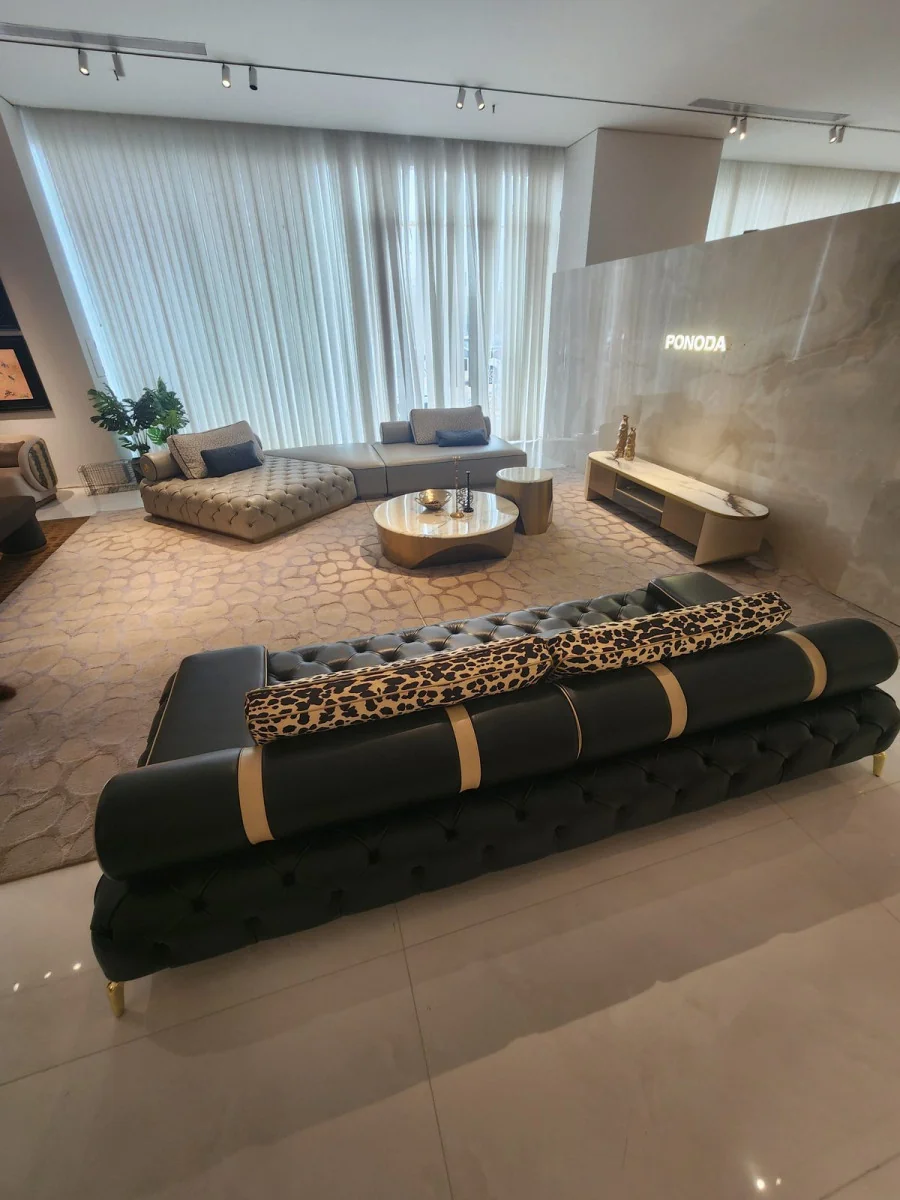
Agree the direction of pile, pattern placement, seam positions, piping and how fabric joins occur across repeated pieces. A large pattern may require more material than a plain covering. Review the proposed fabric width and cutting approach before fixing quantities. For client-supplied fabric, allocate responsibility for delivery, inspection, wastage and shortages. Keep the fabric code and accepted appearance linked to the furniture item rather than relying on a loose swatch.
Review comfort and future repairs
Assess seat depth, height, firmness, back support and ease of getting up on a complete sample where practical. A foam description does not replace an actual comfort review. Ask which components can be replaced and whether extra fabric from the production batch should be retained. Record care instructions and replacement references for handover. Agree the final seating construction before repeated manufacture, especially when several factories contribute to one coordinated interior.
Project checklist
Before you release the order
- Record the exact textile reference and composition.
- Check cleaning compatibility and relevant evidence.
- Agree pattern direction, seams and cutting allowances.
- Review comfort and retain replacement information.
A useful question
Does the highest abrasion rating mean the longest-lasting upholstery?
No. Laboratory abrasion results are only one part of the assessment. The fabric construction, actual use, cleaning, light exposure and furniture design also affect appearance and durability. Compare like-for-like evidence and select for the real application.