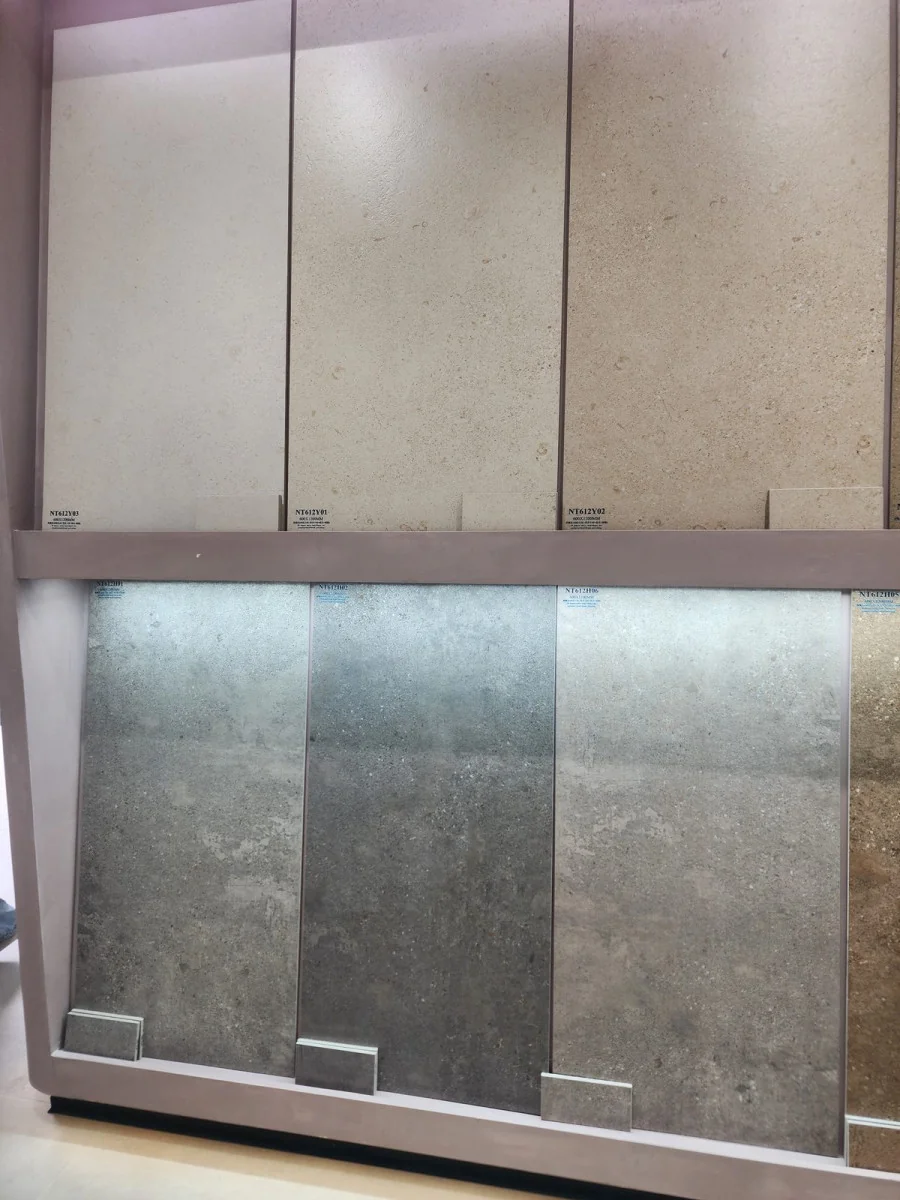
Separate the visible surface from the structure
Ask what lies beneath the finish. Solid timber, timber veneer and decorative laminates are different constructions, even when their photographs look similar. Compare the proposed substrate, edge treatment, joint detail and repair options. Request information about suitability for the intended location rather than assuming a material name guarantees performance. For a large flat surface, construction and manufacturing details can matter as much as the visible species or colour.
Compare stone, metal and mixed materials
Record the actual material and finish, not simply “marble look” or “gold metal.” Discuss weight, support, edge vulnerability, cleaning restrictions and connection details. Natural materials may vary between pieces; decide whether variation is part of the design or needs tighter selection. A table with a heavy top also needs a coordinated base and handling plan. Ask how separate materials will move, be joined and be serviced.
Match the finish to daily operation
Consider what users touch, spill or clean most often. A reception desk, dining table and bedroom cabinet may require different practical choices despite sharing a colour palette. Ask for product-specific care instructions and relevant performance evidence for the exact proposed finish. Review a realistic cleaning method with the operator. Avoid promising that a surface is stain-proof or scratch-proof when its behaviour depends on use, treatment and maintenance.
Evaluate alternatives through the whole order
When reducing cost, compare the complete effect of a substitution: appearance, weight, machining, repairability, manufacturing time and packaging. Separate a material saving from a change in dimensions or construction so the decision remains understandable. Retain the accepted material description with the item specification. Destination-specific requirements, including any relevant emissions or safety provisions, should be defined and reviewed by qualified project advisers before the material is committed.
Project checklist
Before you release the order
- Identify surface, substrate and edge construction.
- Compare weight, repair options and cleaning needs.
- Decide how natural variation will be handled.
- Document substitutions and project-specific requirements.
A useful question
Is solid wood always better than veneer for commercial furniture?
No. They serve different design and construction needs. Evaluate the complete product, including its substrate, joints, finish, expected conditions and repair strategy. A well-specified veneered item can be more suitable for a particular application than an unspecified solid-wood alternative.